Home
>
ABA Therapy
Applied Behavioral Analysis (ABA)
Training & Therapy
What is Applied Behavior Analysis
for Hong Kong Children?
Applied Behavior Analysis (ABA) in Hong Kong, and internationally, is a rigorously researched, scientifically validated, and evidence-based therapeutic approach grounded in the scientific principles of behaviorism. This ABA therapy methodology systematically applies interventions based on learning theory to improve socially significant behaviors. Extensive clinical research has consistently identified ABA in Hong Kong as one of the most effective interventions for treating Autism Spectrum Disorder (ASD) and other developmental challenges in children, with peer-reviewed studies supporting its efficacy across various settings and populations.
ABA in HK operates on the principle that behavior is shaped by its environment and consequences that follow it. This means that by carefully and systematically adjusting these environmental factors and resulting outcomes, ABA training can significantly increase a child’s intrinsic motivation and overall capacity to learn. As its core, ABA in Hong Kong focuses on understanding the relationship between behavior and the environment to bring about meaningful and positive change.
Partnership
Skills
Success
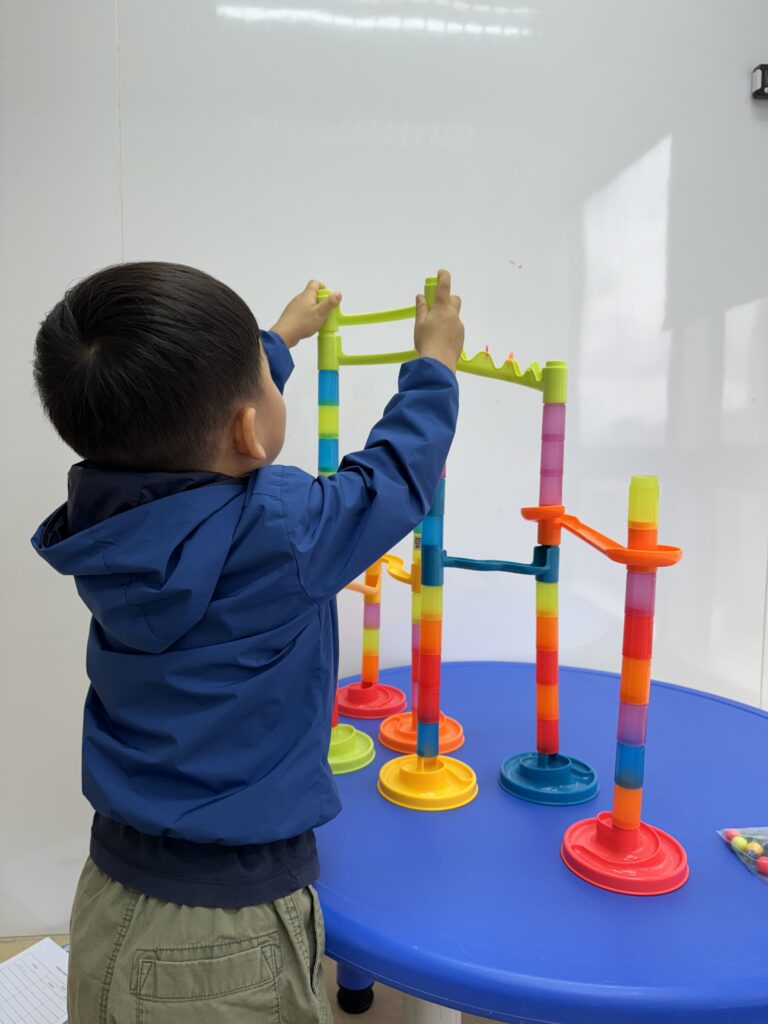
At The Mind Project, we translate this principle into actionable, real-world results through highly personalized ABA Hong Kong programs. We believe that every child is unique, and therefore, every learning journey or ABA therapy must be uniquely tailored. Collaborating closely with parents as essential partners, we build a structured, goal-oriented ABA training program targeting the skills that matter most—comprehensively addressing areas from foundational thinking and effective communication to meaningfully connecting with others and successfully managing daily tasks. This holistic approach to ABA for Hong Kong children ensures that their development is well-rounded. These targeted skills include, but not limited to enhanced cognitive abilities, sustained focus and attention, functional communication, positive social interaction, and practical adaptive living skills. Mastery in these domains thereby builds a strong, resilient foundation that actively supports the child’s overall growth and paves the way for successful participation in home, school, and community life through applied behavior analysis in Hong Kong.
Why Choose
Our Child Our ABA Training Program?
The Mind Project offers a uniquely flexible and personalized ABA training program tailored for the fast-paced, demanding lifestyles of Hong Kong families. While conventional, intensive training often requires an intensive 30-40 hours weekly commitment, which can be overwhelming for both the child and the family, therefore our center offers a more sustainable, flexible, and practical ABA HK approach.
For instance, our standard schedule consists of 3 focused ABA therapy sessions per week, each lasting two hours. This applied behavior analysis Hong Kong model is designed to provide consistent, high-impact intervention without leading to exhaustion. Further, this thoughtfully adaptable ABA Hong Kong schedule allows it to fit naturally and seamlessly into your child’s busy academic and extracurricular life, ensuring that learning complements life rather than complicates it. Overall, our ABA HK approach is engineered to ensure steady, measurable progress, effectively prevents burnouts in both children and parents and proactively contributes to maintaining the crucial balance of family life.
Learn more
Our ABA therapy HK program is powered by a multidisciplinary professional team comprising clinical psychologists, Board Certified Behavior Analysts (BCBAs), and experienced behavior therapists. This diverse expertise allows us to address each child’s needs from multiple, complementary angles. The collaborative foundation also ensures comprehensive, wrap-around developmental support for every step of a child’s developmental journey in our ABA training program. A distinctive feature of our ABA therapy in HK is the deliberate implementation of a multiple-therapist model for each case. This means your child will work with a small, dedicated team rather than a single instructor. Moreover, each child benefits significantly from working with several ABA HK therapists in a coordinated rotation, which intentionally introduces varied teaching styles, communication methods, and positive social dynamics within our ABA training. By practicing with a variety of people and in different scenarios, children build adaptable, real-world skills. This approach to ABA for Hong Kong children ensures learning is robust, generalizes beyond the therapy room, and fosters greater independence.
Furthermore, prior to commencing any ABA training program, we prioritize a thorough and collaborative start by providing an initial consultation service conducted by either a clinical psychologist or a BCBA. This step is not merely an assessment but the beginning of our partnership with your family. It involves professional observation of the child and a detailed interview with the parents at our applied behavior analysis Hong Kong center, in which we listen to your concerns and goals for your children, as well as their daily experience. Following this comprehensive ABA Hong Kong assessment, the supervising BCBA collaborates closely with parents to develop a personalized Individualized Education Plan (IEP), establishing clear, measurable, and achievable short-term and long-term goals. We ensure precise objective, and transparent progress tracking in our ABA therapy, we employ a rigorous, data-driven methodology, utilizing video recording for behavioral analysis and systematic metrics to regularly review, analyze, and optimize each child’s ABA HK curriculum, ensuring that our strategies evolve with your child’s progress.
What Types of Children is
ABA Therapy Designed For?
Our ABA training program is designed for children with a range of diagnoses such as Autism Spectrum Disorder (ASD), Attention Deficit Hyperactivity Disorder (ADHD), global developmental delays, and those exhibiting significant behavioral challenges. These children that need ABA therapy in HK often create barriers to learning and social integration that require specialized, structured support. These challenges can lead to frustration, anxiety, and a widening gap between their potential and their daily functioning.
Our Applied Behavior Analysis in Hong Kong directly and effectively addresses these challenges by observing and analyzing the children’s behavior to understand its purpose. We move beyond simply seeing a behavior to understand why it is occurring, but through this data-informed analytical approach, our skilled ABA Hong Kong therapists utilize collected data to uncover the underlying reasons and motivations behind these behaviors and then apply evidence-based teaching methods to foster positive, and functional skills. Our ABA HK curriculum focuses on building skills that replace challenges with competencies, a fundamental value and critical component for us to partner authentically with families throughout this process to improve the children’s everyday functioning and enrich their overall quality of life. As a dedicated ABA Hong Kong centre, our success is measured by your child’s increased happiness, independence, and engagement in the world around them.
Our ABA Therapy HK Program - A Step-by-Step Process:
1
Step 1: Initial Consultation - Building Understanding & Partnership
Your child’s personalized ABA Hong Kong journey begins with a comprehensive consultation with a clinical psychologist or a BCBA. This meeting is designed to be informative and collaborative. This crucial first step in our ABA training program involves sensitive clinical observation of the child in a relaxed setting and a detailed, conversational interview with the parents.
The primary goal is to develop a deep, mutual understanding of the child’s unique challenges, the family’s core concerns and goals for applied behavior analysis in Hong Kong. This initial ABA HK consultation is also an opportunity for the family to ask questions and share your priorities, ensuring we build a plan that aligns with the family’s goals. We view this as the essential foundation upon which all future processes are built.
2
Step 2: Personalized Education Plan (IEP) Development & Implementation
This critical phase of our ABA therapy in HK begins with an in-depth core observation period, where a BCBA personally leads the first five sessions to deeply understand your child’s unique profile, including carefully assessing the child’s behavior, individual learning patterns, primary motivators and specific strengths. This hands-on assessment allows the BCBA to see your child as a whole person. Synthesizing these rich insights with your family’s explicitly stated goals and values, the BCBA then crafts a detailed and customized Individualized Education Plan (IEP) for our ABA training programme.
Once the plan is set, ABA therapy is delivered consistently by a dedicated, trained team of therapists on a carefully managed rotating schedule overseen by the BCBA. This rotation is a strategic choice that helps your child generalize learned skills across different people and teaching styles, thereby building crucial adaptability and flexibility for real-world success.
3
Step 3: Ongoing Progress Monitoring & Review
The supervising BCBA schedules regular ABA Hong Kong meetings with you as the parent, to review your child’s progress toward their specific IEP goals in our ABA training. During these collaborative sessions, we share detailed, easy to understand progress reports and illustrative video clips that provide a clear, objective, and visual record of your child’s progress and achievements during ABA therapy in HK.
This transparent process allows parents to gain a clear understanding of their child’s recent performance and developmental strides, fostering a sense of shared accomplishment during applied behavior analysis in Hong Kong. Based on these data-driven insights, the BCBA and parents jointly refine, adjust, and set the subsequent phase of learning objectives, ensuring our ABA HK program remains a dynamically optimized, responsive and effective pathway for continuous growth.
4
Step 4: Active Parental Involvement & Generalization
We believe that parents are the most important teachers in a child’s life. Following each ABA HK session, the behavior therapist provides parents with a brief update on the child’s performance, engagement, and breakthroughs during class, to ensure that you are always connected and informed. Your ABA HK therapist will also provide clear, manageable weekly “Home Practice” guides, equipping you with the tools to support learning.
We actively encourage and empower parents to implement these corresponding, therapist-recommended ABA training strategies at home and in the community. This vital component of our ABA Hong Kong program ensures that skills learned in the structured therapy room are successfully generalized, applied stably and practiced confidently across different real-life environments, such as home, park or the supermarket, thereby cementing their learning, promoting true independence, and allowing your child to stride confidently toward a more autonomous future.
Our ABA Training Methodologies
A Systematic Approach: The 3 Core Teaching Phases of our ABA training program
During ABA therapy in HK, we break down complex learning into manageable, successful steps:
Stage 1: Matching
When introducing a new concept in our ABA therapy, the first step is teaching the child to understand the concrete idea of “sameness” through physically matching identical items. For example, given one “apple”, the child learns to scan and find an identical “apple” from an array of options. This builds visual discrimination and the concept of categories. To ensure mastery and fluency, our ABA training progresses systematically and sequentially: starting with matching “3D object to 3D object”, then advancing to the most abstract “3D object to picture”, and finally achieving “picture to picture” matching. Each step prepared the brain for the next phase of our ABA training program.
Stage 2: Discriminating (Receptive Identification)
In this pivotal phase of our ABA therapy HK program, the child learns to correctly identify, point to, or give a target item from multiple options based solely on a clear verbal instruction (e.g., “Give me the apple” or “Touch the apple”). This is a shift from visual matching to auditory comprehension. This phase of ABA training critically strengthens the neural link between an object’s name and its visual representation, building crucial listening skills, following directions, and overall language comprehension in our ABA HK training. It answers the question, “Do you understand what I’m saying?”.
Stage 3: Labeling (Expressive Identification)
Finally, we teach the child during ABA in Hong Kong to actively name or label items independently, thereby enhancing their expressive language abilities. For example, upon seeing an apple, the child learns to spontaneously and confidently say, “Apple”. This transforms them from a passive receiver of information, to an active communicator, during applied behavior analysis Hong Kong therapy.
ABA Therapy in HK that Employs "Prompting" to Facilitate Learning:
We believe in setting children up for success from the very first attempt. Our ABA therapy emphasizes the strategic use of “prompts” (which are hints or aids like pointing, modeling, or a hand-over-hand guidance) to support learning without causing frustration.
A key, empowering technique during our ABA therapy in HK is “Errorless Learning,” where prompts are provided proactively before an error can be made, to ensure the child responds correctly from the very beginning. This builds confidence instead of correcting failure. The profound benefit of this approach within our ABA training program is that it allows the child to experience frequent, reinforced success in a short period, building a strong, positive and motivating association with the learning task itself. This not only strengthens the child’s intrinsic motivation but also significantly boosts their self-confidence and willingness to try.
Crucially, to prevent prompt-dependency and foster independence, the therapists in our ABA training program systematically and gradually fade out these prompts in a planned sequence as the child’s competence grows, ultimately enabling the child to perform tasks fluently and independently.
ABA Training to Elevate a Comprehensive Range of Developmental Skills:
Our Applied Behavior Analysis in Hong Kong employs ongoing data collection and systematic, responsive adjustment of teaching strategies and prompt levels to guide children in mastering a comprehensive range of essential developmental skills.
We track progress in our ABA HK program objectively to make informed decisions. These areas include cognition (such as thinking and problem-solving), language and communication in both understanding and speaking, fine motor skills (such as holding a pencil), positive social interaction, and practical self-care (activities of daily living such as dressing and feeding). Based on initial Applied Behavioral Analysis Hong Kong assessment results and continuous clinical observation, therapists design specific ABA training goals that precisely match the child’s unique needs and readiness. Complex skills, such as having a conversation or getting dressed, are broken down through “task analysis” into a series of small, easily achievable and teachable steps in our ABA Hong Kong program.
Through this careful chaining process, children learn each component sequentially, with mastery at each step, until they can perform the entire complex skill fluently, independently, and with pride.
”Individual” vs. “Group” ABA Hong Kong Programs -
Which is Best for Your Child
Recognizing that one size does not fit all in ABA Hong Kong therapeutic education, to meet the diverse and evolving needs of every child, our center provides both highly individualized one-on-one and engaging small group-based ABA therapy. We offer the right environment for each stage of growth:
”Individual” ABA Therapy in HK:
Our one-on-one ABA HK program is open to children of all ages and is particularly designed for those requiring intensive, targeted support in strengthening foundational learning-to-learn skills, such as sustained attention, imitation, instruction-following, functional communication, or for those managing specific behavioral challenges that require focused intervention.
This ABA therapy format allows for zero distractions and maximum personalization. Each individual ABA training is built upon a deeply personalized IEP, created from direct behavioral observations and invaluable parental input, setting clear, sequential long-term and short-term ABA Hong Kong developmental goals. Every minute of the session is tailored to your child, as the one-to-one ABA HK format allows for highly focused, responsive intervention, effectively targeting the child’s unique needs to accelerate skill acquisition and build momentum.
The ultimate aim of this type of ABA therapy is to empower the child with a strong skill foundation, which then enables them to successfully generalize and utilize these skills more independently in broader, less structured social and group settings. We build the skills of ABA Hong Kong children here so they can use them in their daily life.
”Group” ABA Therapy in HK:
Our Applied Behavior Analysis Hong Kong group training is specially designed for younger children aged 2 to 4 years who are suspected of or diagnosed with special educational needs and who are ready to benefit from peer interaction. This is often a natural next step after individual skills are established for ABA Hong Kong children.
These classes adopt a supportive, small-group ABA HK teaching model, with a maximum of 6 children per class to ensure each child receives ample attention. It’s small enough to be supportive but large enough to be social. The primary focus of ABA therapy group sessions is on developing foundational, pragmatic social skills—such as sharing, turn-taking, cooperative play, joint attention and following group directions within a naturalistic, playful context. This intentionally supportive and structured environment in our ABA training program makes it easier for children with diverse learning needs to connect with peers, practice new skills in real-time, and gain confidence for navigating broader social and community settings, like preschool. It is a bridge to a bigger world.
Our applied behavior analysis Hong Kong centre is here to support you in finding the best fit for your child’s current needs and next stage of development. We understand that choosing the right type of training can be confusing for parents at first, therefore we strongly recommend consulting with our clinical psychologists or utilizing our detailed assessment services to jointly observe, discuss, and plan the most suitable, effective and sustainable ABA training pathway for your child’s unique journey.
Witnessing Growth: Our ABA HK Success Stories
Success Story 1: Replacing Tantrums with Communication
Before Hei Hei started the ABA Hong Kong program, he often found the busy classroom environment overwhelming and confusing. The demands of the group setting exceeded his coping skills. Prior to enrolling into applied behavior analysis in Hong Kong, he was frequently reported by his teachers for running around the classroom and unable to sit still. His days were marked by constant movement, inability to follow simple one-step directions, and no consistent response when his name was called by adults or peers. Frustration from these unmet needs and communication barriers would often erupt into loud, distressing tantrums, as he had no other functional way to express his needs, wants, or feelings.
Our center’s ABA HK program offered him the structured framework, predictable routines and practical, visual tools necessary for meaningful behavioral change and communication growth. ABA in HK gave him a system where he could succeed. Hei Hei made remarkable, steady progress in first understanding and then consistently following instructions. He learned, step-by-step, to adhere to basic classroom rules: he could now remain seated in his chair and stay visually focused to complete tasks, rewarding tasks. Importantly, he demonstrated true skill stability and generalization by successfully completing similar instructions with different ABA HK therapists. A pivotal, heartwarming moment came when he began consistently recognizing and responding to his own name, learning to orient his body and make brief eye contact when called by different people throughout his day.
The most transformative step in his ABA training was the systematic introduction of the Picture Exchange Communication System (PECS). For the first time in his life, Hei Hei had a clear, reliable, and socially acceptable way to show us what he needed or wanted. As his ability to communicate purposefully increased after ABA therapy in HK, his previous behavior decreased markedly and consistently. As a direct result of gaining a “voice”, Hei Hei transformed into a much happier, more engaged, and calmer little boy through our ABA training program.
Success Story 2: Using Reinforcement to Increase Verbal Expression Motivation
Prior to Aiden’s enrolment in our ABA Hong Kong program, he presented with very limited functional communication. He was a child of action, not words. His primary means were screaming to protest or avoid something, and using non-verbal methods (e.g., leading an adult by the hand) to make a request. While somewhat effective, these methods were limiting and often misunderstood. His ABA HK therapist’s assessment determined that Aiden first required a solid cognitive and receptive language foundation, as he needed to understand that things have names and purpose, before we could successfully focus on increasing his motivation for verbal expression.
Our ABA Hong Kong therapists started from the very beginning, focusing patiently on the core abilities he needed first. We built the foundation brick by brick. This involved strengthening Aiden’s understanding of the world around him through play-based learning, such as consistently pairing objects with their names and demonstrating their functions. Furthermore, as this understanding grew, Aiden was gently encouraged and shaped to make sounds that approximate object names. Gradually, with immense positive reinforcement, he advanced from those approximations to clear, intentional single words and later to purposeful short phrases to express his needs and label his world though our ABA Hong Kong program, for example “Ball” became “Want ball” and then “Blue ball, please.”
Through this patient, step-by-step ABA HK teaching approach paired with a powerful, individualized positive reinforcement system (using his most coveted toys and activities as rewards for vocal attempts), Aiden learned that using speech was the most effective and rewarding way to communicate his needs, in other words talking worked better than pulling or screaming. His intrinsic motivation to communicate verbally grew organically from the repeated joy and success of being clearly understood. This transformative process successfully turned his previous frustration into positive connection in his program, laying the groundwork for ongoing language development.
ABA Therapy HK Parents’ Testimonials
Hayden's Father
“The ABA HK therapists at The Mind Project are incredibly caring, patient, and attuned to the children. After receiving ABA therapy, my child’s attention span and ability to focus have improved noticeably and have changed our daily life. Before ABA training, he couldn’t sit still to listen to a short story. Now, he actively picks up a favorite book and brings it to me during the evenings, and asks me to read together”
Sze Kei's Mother
I always hear the therapist happily and specially praising her from outside the room while my child is having his ABA therapy sessions. The consistent joyful, and encouraging environment has been transformative. Their ABA training has helped him grow in confidence and ability in every way. After months in the ABA program, she not only initiates simple conversations with us at home but has also learned to take turns while playing with her siblings, waiting patiently during the process.
Riley's Grandfather
After every session of our ABA training, the ABA Hong Kong therapist patiently meets with me to inform me about my child’s specific performance, efforts, and small achievements during class. They also carefully and clearly explain how I can conduct corresponding, simple ABA training at home, even proactively sending detailed step-by-step instructions and helpful demonstration videos via WhatsApp for me to follow easily. This support makes me feel like a capable partner in his learning.
Lok Lok's Mother
The detailed reports and videos from our applied behavior analysis Hong Kong training show exactly how my child is improving. I am so grateful for the clear guidance every step of the way in our ABA therapy!
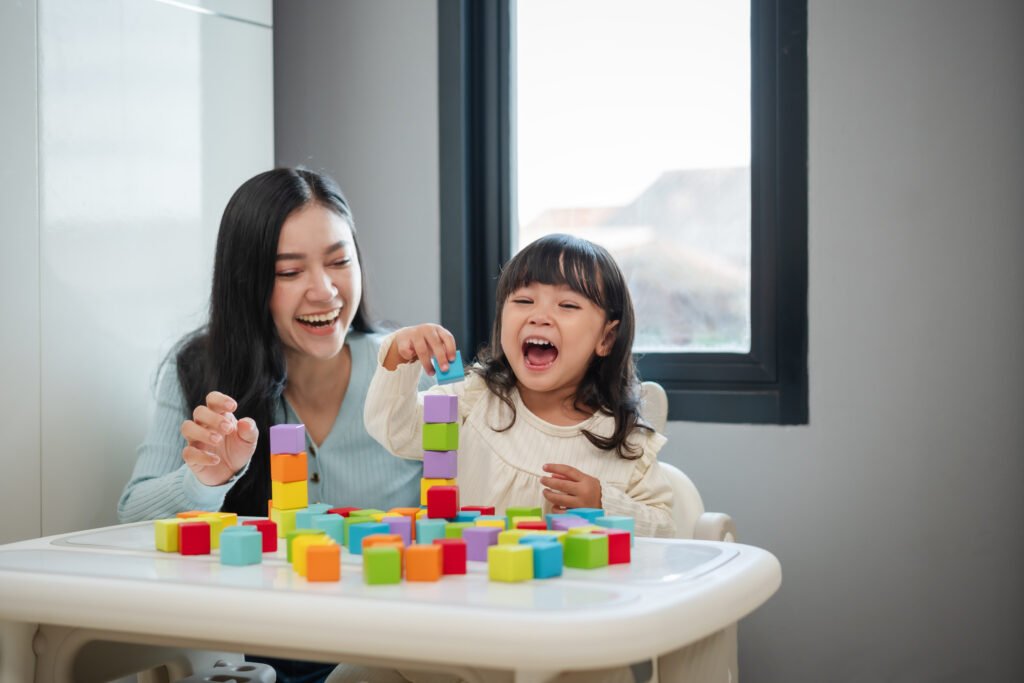
About The Mind Project’s
ABA Training Program & Therapy -
FAQs:
1. How does your ABA therapy HK program teach communication?
Our ABA therapy begins communication training by meeting your child at their current skill level, wherever that may be. For example, if a child has not started vocalizing or using words, we may recommend starting with non-verbal, visual methods like using the Picture Exchange Communication System (PECS) or simple gestures in our ABA Hong Kong training. This gives them an immediate, successful way to connect.
The fundamental ABA training strategy is to discover, through careful observation, what motivates your child most powerfully and then use those preferred items or activities as rewards to reinforce any communication attempt. A core part of Applied Behavior Analysis in Hong Kong is the precise identification of a child’s highest-motivation reinforcers to build a strong, positive desire for the child to connect and communicate. Once the child experiences the tangible utility and success of communication, we gradually raise our expectations within our ABA training. This natural progression might start with reinforcing any sound approximation, then shaping clearer sounds, then expecting a clear single word, with the ultimate goal being the spontaneous, clear labeling of objects and the independent expression of needs and ideas. Our ABA HK program is designed to be a journey from basic connection to fluent expression.
2. What is the typical schedule for ABA therapy in HK? How long is each session?
We generally recommend a schedule of 3 sessions per week for our ABA training program, with each session lasting 2 hours. However, we maintain a flexible and family-centered approach to ABA therapy and training hours, understanding the need to adapt to the child’s individual capacity for engagement and family logistics and rhythms. For example, to maintain optimal focus and positive learning experiences, therapists may offer shorter ABA therapy sessions to younger children who have shorter attention spans; and for those who prefer more intensive ABA HK training, we could offer 5 days a week training for optimal progress.
3. How do therapists handle emotional outbursts or tantrums during ABA training?
Our therapists in our ABA training are specially trained to look for the underlying reasons or functions behind the behavior (e.g., is the child tired, hungry, frustrated, or is the task too difficult?). Based on this observation, they then proactively adjust the ABA training session strategy in the moment. This may involve, for instance, offering more choices to give the child a sense of control, incorporating more frequent short breaks for emotional regulation, or temporarily lowering task difficulty to ensure the child experiences success and rebuilds learning motivation and self-confidence.
4. Do ABA training instructors use punishment to correct problem behaviors?
From our Applied Behavior Analysis Hong Kong center’s perspective, we operate on a proactive and positive model. We believe the most ethical, effective, and lasting way to reduce a challenging behavior is to teach and powerfully reinforce a positive “replacement behavior” that serves the same function for the child. In ABA therapy sessions, therapists first identify the function (the “why”) of the problem behavior through observation, then teach an appropriate and socially acceptable “replacement behavior” that meets the same need for the child, while using motivating reinforcement to motivate its use. For example, instead of screaming to get help, a child is taught to say “help” or use a “help” picture card. Crucially, we ensure that this new way is the only way that he or she can quickly receive the help they need in our ABA Hong Kong training program, which will also reinforce this new positive way of communication.
5. Can parents participate in developing the IEP for the ABA training program?
Absolutely. We believe parental input forms the essential foundation of a successful and relevant ABA therapy plan. Before drafting the IEP, the senior therapist (BCBA) conducts an in-depth interview with parents to understand their goals, concerns, and observations for their child. This invaluable partnership ensures the final IEP for our ABA training is a true synthesis combining the therapist’s clinical observations and expertise with the parent’s insights and goals, that can truly meet the child’s needs. Before implementation and ABA therapy begins, every objective and strategy within the plan will be thoroughly reviewed with you for clarity and consensus.
6. How can an Applied Behavior Analysis Hong Kong program help prepare my child for kindergarten or primary school?
Our ABA HK program helps prepare children for school by building a solid foundation for a successful and positive learning experience. Key preparatory areas in our ABA therapy include:
- Foundational Skill Training: Building the ability to sit quietly in a group, listen to the teacher, follow multi-step group instructions, and engage in “joint attention” (e.g. looking where the teacher is looking).
- Social Skill Development: Teaching the pragmatic rules of interaction, such as turn-taking, waiting patiently in line, sharing materials, and using words for basic conflict resolution through interactive activities in our ABA training.
- Pre-Academic Skills: Focusing on basic cognitive concepts (e.g. colors, shapes, numbers), pre-writing fine motor skills (e.g., proper pencil grip, scissors use), and the adaptability to transition between classroom activities and environments through our ABA training program.
7. How can your Applied Behavior Analysis Hong Kong program help improve my child's social skills?
Social skills encompass a complex set of vital abilities like turn-taking, cooperation, empathy, perspective taking, and understanding unwritten social rules. These are not always innate and often need to be explicitly taught. Based on the therapist’s clinical observation and the parent’s insights about their child’s specific social challenges, we typically begin with one-on-one ABA training, where the therapist uses tailored prompts (physical, verbal, visual) to teach and practice these foundational social skills. Once mastered individually with the therapist, we gradually introduce the child to small, structured group activities with therapist support in our ABA therapy. The final goal is for the child to generalize and use these skills fluently and independently in various natural settings like in school, playground, or larger peer groups through our ABA training program.
8. Can parents attend the Applied Behavior Analysis Hong Kong sessions together?
For both individual and group ABA therapy sessions, we generally encourage children to attend them independently. This fosters familiarity with the center’s environment and routines, and builds the child’s confidence and independence. However, for children experiencing significant anxiety, especially very young children or those new to any structured settings, we can arrange for parents to join initially in our ABA training. As the child adapts, feels safe, and begins to engage, we will gradually phase out parental presence to achieve the goal of independent participation in the ABA training program.
9. How can Applied Behavior Analysis in Hong Kong reduce my child's behavioral problems?
ABA therapy in HK operates on the core principle that all behavior, even challenging behavior, serves a purpose or function for the individual. It can be understood through the “ABC” model: observing and recording the Antecedents (what happens right before the behavior), the Behavior itself, and the Consequences (what happens immediately after). The purpose of behaviors is often to obtain something (e.g. a toy or food), to gain attention, to escape or avoid a demand or situation, or for sensory stimulation. Based on this observation, the therapist designs a specific, proactive intervention plan within the ABA training program, which focuses not on punishment, but on teaching and reinforcing appropriate alternative behaviors that meet the same underlying need, thereby reducing the problem behavior inefficient and unnecessary, in other words reduces its occurrence over time in our ABA training.
10. What are the qualifications of your ABA training therapists? How is quality assurance maintained?
Our clinical team operates on a 3-tier professional supervision model to ensure the highest standard of ethical and evidence based care in our ABA training program. It includes Clinical Psychologists, Board Certified Behavior Analysts (BCBAs) and Behavior Therapists. Our BCBAs hold a master’s degree in behavior analysis or related field, have completed extensive supervised fieldwork, and have passed a rigorous international certification exam. They are the lead architects of each child’s ABA therapy/program, responsible for assessment, personalized plan (IEP) design, data analysis and clinical oversight, supervised by our Clinical Psychologists. Behavior Therapists, on the other hand, hold relevant bachelor’s degrees (often in psychology and education) and have completed specific ABA training, implement the daily programs under the close, ongoing and direct supervision of a BCBA, who regularly observes sessions, reviews data, and provides coaching. This tiered model in our ABA therapy ensures treatment fidelity, maintains high quality, and guarantees adherence to best practices in the field.
11. How long does it typically take to see progress in an Applied Behavior Analysis Hong Kong program?
It’s important to understand that every child’s progress timeline during ABA therapy in HK is unique, influenced by factors such as the complexity of their goals, their natural learning pace and adaptability, their motivation, and the level of consistent parental involvement and strategy use at home. Therefore, we recommend a consistent schedule (e.g., three 2-hour sessions per week) for optimal impact, which it is difficult to predict precisely, we strongly recommend a consistent schedule (e.g. three 2-hour sessions per week) as this provides the optimal practice for skill acquisition and behavioral impact in our ABA training. With such consistent, quality ABA therapy, most families who maintain this recommended engagement typically report observing positive, noticeable changes and new skills emerging within the first few months.
12. My child is already receiving special education training at school. Why is an additional ABA training program necessary?
School-based special education is invaluable and primarily focuses on curriculum adaptation, academic support, and minimizing learning gaps within the classroom setting to help the child access the general education curriculum. Our ABA HK program serves a complementary but distinct role: it offers intensive, one-on-one, personalized ABA therapy that specifically targets the underlying individualized behavioral goals and foundation skills deficits that often impede learning in the first place (e.g. attention, compliance, communication, social skills). Through personalized, one-on-one instruction in our ABA training program, we target the specific skill gaps that may not be addressed in a busy group classroom setting, thereby laying the critical foundation necessary for the child to benefit more fully from all the support their school provides.
13. Won't "Positive Reinforcement" in ABA therapy make my child learn only for rewards?
In ABA therapy, the purpose of positive reinforcement is to build initial motivation and create a positive association with learning by pairing effort with a sense of accomplishment and a desired outcome. In the beginning phrases of our ABA training, we may use powerful, tangible rewards (like a small piece of a favorite treat or a minute with a coveted toy) strategically to make a new or difficult learning task immediately rewarding and to capture a child’s focus. However, as the child masters the skill and begins to experience the natural social praise and intrinsic satisfaction of “I did it!”, we systematically “thin” the schedule of reinforcement in our ABA training program, meaning we make the tangible rewards less predictable and frequent, while simultaneously shifting the primary reinforcement to more natural, social, and universal rewards like specific praise, high-fives, or the inherent enjoyment and pride in the task itself. In other words, the external reward is a bridge to internal motivation, and this careful process helps transition the child from being externally motivated to being intrinsically motivated, fostering a genuine and lasting love for learning, mastery, and social connection through our ABA HK training.
14. How do I know if my child needs to enroll in an Applied Behavior Analysis Hong Kong program? What are the signs or symptoms to look out for?
Consider exploring an ABA training program if you, as a parent, observe significant developmental differences compared to same-aged peers, or if you see specific behaviors that negatively impact daily life and learning. The signs that your child may need ABA therapy in HK can include, but are not limited to: avoiding eye contact and social engagement, a lack of intentional communication (e.g., pointing or showing to share interest), repetitive motor movements or speech (e.g., echolalia), extreme emotional reactions to minor changes, significant difficulty sitting still or attending learning. A consultation with our clinical team can provide objectives, professional guidance on whether the ABA Hong Kong program is an appropriate intervention for your child’s needs.