Home
>
Child Developmental Delay
Child Developmental Delay Treatment Courses
Why Would Children Need Developmental Delay Treatment?
Developmental delay in HK children refers to a significant lag in their various developmental characteristics when compared to their peers of the same age. Each age stage has specific developmental traits that can be observed in domains such as cognition, language, gross motor skills, fine motor skills, social and emotional development, and self-care skills. Parents can use these developmental characteristics to assess whether their child’s development is appropriate for their age.
If parents notice that their child is significantly delayed in these domains, it is advisable to seek professional evaluation and developmental delay HK intervention as early as possible, as well as appropriate child developmental delay treatment. Timely identification of issues can help provide the necessary resources and developmental training during the ‘Golden Period’ to promote the child’s development.
Our Developmental Delay
Courses & Training
The Mind Project provides a variety of specialized individual and group developmental delay courses for young children experiencing developmental delays, ensuring that every child can obtain the appropriate support and intervention based on their individual needs.
1. Child Developmental Delay Treatment – “Individual Training”
In “individual” developmental delay HK training, we provide SEN (Special Educational Needs) personalized training programs taught by experienced early childhood teachers. This developmental delay course specifically targets children suspected or diagnosed with special learning needs, fully capitalizing on the ‘Golden Period’ before 6 years old. Based on each child’s developmental status, we create an individualized education program (IEP) that systematically addresses 6 domains, which are language, cognition, gross motor skills, fine motor skills, social skills, and self-care. This ensures they receive the necessary child developmental delay treatment and support.
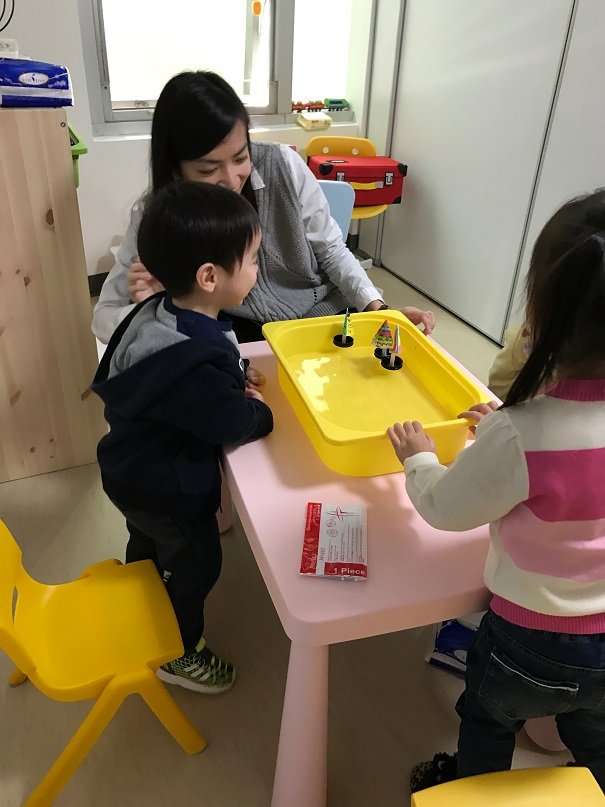
More specifically, our teaching approach in individual developmental delay treatment emphasizes learning through ‘play’, allowing children to explore new skills in a relaxed and enjoyable environment. As a result, this not only enhances their motivation to learn but also helps them apply the skills they acquire to their daily lives, fostering better integration into society.

2. Child Developmental Delay Treatments – “Group Training”
The all-rounded, intensive developmental delay HK training class has been carefully designed to facilitate group ttherapy that focuses on the developmental needs of children. This program is further divided into 2 age groups:
All-rounded intensive training class (2-3 years old)
This developmental delay course is designed specifically for preschool children with developmental delay in HK that are 2-3 years old. This effective child developmental delay treatment program is designed to align closely with the nursery school model, utilising a variety of interactive play activities that support comprehensive development in children. This approach supports a smoother transition into a school environment and strengthens children’s ability to adapt to group settings.
- Every month, the teachers will introduce various plans and topics designed to promote efficiency and help children with developmental delay in HK reach their full potential. Activities may include reading stories, engaging in games, singing, drawing, and motor skills training, among other similar elements.
- The teacher will attentively address the unique needs of each child within the classroom environment to effectively enhance their learning milestones.
- A learning handbook will be provided at the end of each month, alongside regularly scheduled meetings between parents and therapists. This ensures that parents are well-informed about classroom activities and their child’s learning progress, enabling teachers to offer tailored support for the child’s development and growth.
All-rounded intensive training class (3-5 years old)
This developmental delay course is specifically designed for children enrolled in kindergarten, with each course being customized to meet the individual needs of each child.
- Each class will utilize the Treatment and Education of Autistic and Related Communication Handicapped Children (TEACCH) framework as a reference. This approach helps us to effectively address all developmental domains, including cognitive, language, gross and fine motor skills, self-care, and social skills, particularly for those in need of child developmental delay treatment. Hence, an individualized education program (IEP) will be tailored to each child’s unique abilities, making sure it suits their personal learning journey and needs. Before finalising every plan, our clinical psychologist will conduct monthly follow-ups to complete a checklist and closely monitor each child’s progress during therapy.
- Additionally, our centre’s behaviour therapist will carry out behavioural training sessions, scheduled weekly for approximately one hour. These sessions will focus on the specific developmental challenges faced by the child who requires additional developmental delay HK support.
All “group” developmental delay HK training sessions will be conducted under a classroom setting, with a maximum of 6 students per class. This structure allows teachers to address each child’s unique needs effectively, thereby ensuring high-quality teaching and learning.
To keep parents informed about their child’s learning progress, we will hold a meeting between parents and therapists every 3 months. These meetings will provide detailed reports on the child’s learning progress and what can be strengthened in the future to help the child further. This collaborative approach will enable both parties to effectively address the child’s developmental delay in HK, while ensuring that the child receives the best, tailored child developmental delay treatment.


Why Do Parents Choose Our Child Developmental Delay Treatment?
Our centre’s developmental delay courses adjust its teaching content based on the specific developmental needs of each child, ensuring that every child receives sufficient support. Our developmental delay treatment curriculum covers 6 key domains: gross motor skills, fine motor skills, language, social skills, cognition, and self-care. We integrate relevant teaching activities across disciplines to facilitate comprehensive development for children in all the above domains.
Different Specialized Professionals Provide Well-Rounded Support:
The developmental delay course is a collaborative effort involving multiple professionals. In addition to the special educational needs (SEN) teacher, it includes specialists from various fields, such as clinical psychologists and behavior therapists, focusing on children with developmental delay in HK. At our center, a SEN teacher leads classes and creates individualized teaching plans based on the 6 core domains mentioned above, providing tailored training and activities for children with special educational needs.
Also, clinical psychologists conduct monthly classroom observations and complete developmental checklists to gain a comprehensive understanding of each child’s learning needs and progress, subsequently collaborating with the SEN teacher to revise teaching plans. We also offer weekly one-hour behavior therapy sessions led by a professional behavior therapist to address behavioral issues in children, which help improve behavioral problems and enhance learning outcomes alongside comprehensive child developmental delay treatment.
Implementing Adaptable “Individual” & “Group” Developmental Delay Treatment Methods:
We provide both individual and group training services in our developmental delay course, enabling parents to select the relevant courses according to their child’s needs, particularly those with developmental delay in HK.
During an individual developmental delay course, parents can collaborate with teachers to determine suitable times and content, adjusting the training plans as needed. The group child developmental delay treatment involves concentrated sessions designed to enhance children’s skills in a focused learning environment.
Emphasizing Parental Involvement:
Our child’s developmental delay treatment plan prioritizes collaboration with parents. We provide a ‘homework’ practice to assist parents in supporting their child’s learning at home. Every 3 months during the program, our multi-disciplinary team will meet with parents to provide the latest updates on their child’s progress, enabling them to understand their current development and work together to develop teaching plans for the developmental delay courses.
We uphold a professional and personalized teaching approach, while committing to providing every child with the most suitable support and developmental delay treatment.
What Children May Need Developmental Delay Treatment?
Our centre provides developmental delay courses for children suspected of, or diagnosed with, special educational needs (SEN). This includes various developmental delay treatments, such as SEN individualized training and all-rounded intensive training classes.
If parents are unsure whether their child has special educational needs, our centre also offers a Comprehensive Developmental Assessment (GDD) service. Through this assessment, we can evaluate children’s development and identify their progress across different areas. The assessment covers domains such as cognition, language, social cognition, fine motor skills, gross motor skills, early literacy, and numeracy. We hope to support children in seeking professional evaluation and developmental delay treatment as early as possible.
How to Enrol in Our Developmental Delay Courses
For “Individual” Training:
- Before formally registering for individual child developmental delay treatment, we recommend that parents schedule a trial class for their child, particularly for those with developmental delay in HK. During the trial class, the teacher will observe the child’s developmental level and ability performance, providing appropriate suggestions and course referrals based on these observations. This arrangement helps parents better understand their child’s needs and potential learning directions.
- After the trial class, the teacher will engage in in-depth communication with the parents to discuss the child’s performance during the trial class, as well as recommend any suitable developmental delay course options.
- Suppose the teacher believes the child is a good fit for specific developmental delay courses. In that case, they will collaborate with the parents to determine appropriate course times and the main focus areas for child developmental delay treatment. This collaborative method ensures a personalized course design, enabling each child to grow and receive developmental delay treatment in the most fitting learning environment.
For “Group” Training:
- Before enrolling in a group training class for children with developmental delay in HK, children must undergo a screening process to ensure that each child receives the most appropriate support. The screening process, which is a crucial step in the child’s treatment, will be conducted by our clinical psychologist.
- During the screening process, the clinical psychologist will carefully observe the child’s behavior and developmental status, providing professional opinions based on their observations and analyzing whether the child is suitable for the intensive group training class, or if there are more appropriate developmental delay course options.
- If the clinical psychologist believes that the child is suitable for the intensive group training class, they will formally enroll the child in the following month, with sessions held 3 times a week. This arrangement ensures that children receive continuous and concentrated professional developmental delay treatment and support in a stable learning environment, helping them make progress in all areas.
Developmental Delay Course Fees:
SEN Individual Training*
From HK$620
All-Rounded Intensive Training Class**
Starting from HK$6,300 per month
The prices listed above are provided as a reference for The Mind Project Limited. For more detailed information about pricing for specific lessons or developmental delay treatment, please contact our centre. You can reach us by phone at 2915 5000 or via WhatsApp at 6772 2546.
* SEN Individual Training is offered in packages of 4 or 10 sessions, allowing parents to choose based on their needs.
** All-rounded intensive training classes are paid on a monthly basis, and the actual number of classes may vary according to the number of days in each month.
Comparing “Individual” vs. “Group”
Child Developmental Delay Treatment
Our centre provides individual and group developmental delay courses. Parents can choose the appropriate mode based on their child’s needs.
SEN Individual Training:
In SEN individual training, parents can engage in in-depth discussions with teachers about suitable course times and content, allowing for flexible adjustments to the individualized education program (IEP) to meet their child’s specific needs, including those related to developmental delay in HK.
SEN individual training is particularly suitable for children who require more focus and support, helping them gradually build confidence and skills in a concentrated and pressure-free environment.

Group Training:
Group training is structured as an intensive course, with a maximum of 6 children in a group, aiming to promote their social interaction and collective learning in a group setting. This form of developmental delay treatment not only helps children enhance their skills through focused learning, but also fosters teamwork and social skills.
Also, group training provides an interactive environment where children can motivate others, grow together, and receive various forms of developmental delay treatment.
Regardless of the type of developmental delay course chosen, we are committed to providing professional guidance and support to ensure that every child can achieve optimal development in a suitable environment.
Developmental Delay HK Case Sharing
Success Story: Jayden's Path to Change
In our centre’s all-rounded intensive training classes, many children experience continuous progress during developmental delay treatment. Among them, we would like to share Jayden’s story, which exemplifies the collaborative efforts of our interdisciplinary team and parents working together to enhance the positive effects of child developmental delay treatment.
Initial Challenges
Jayden faced various challenges at the beginning of participating in the all-rounded intensive developmental delay course, specifically designed for children with developmental delay in HK. During group activities, his attention was often weak; he frequently looked around and struggled to follow directions, needing physical cues and verbal prompts from the teacher.
Additionally, his understanding and ability to express language leaned towards mimicking others, with his comprehension of instructions and questions still requiring improvement. In verbal communication, he was relatively passive, often using ‘ah’ or gestures to express his needs. Socially, Jayden showed some deficiencies in social skills, often playing with toys by himself and engaging little with other children.
Teaching Strategies
During this process, we implemented TEACCH as one of the strategies for his developmental delay treatment plan. By creating a simple classroom environment, we minimized distractions for Jayden and reduced triggers for certain inappropriate behaviors, thereby enhancing his focus during the developmental delay course. We also utilized visual prompts, such as picture cards, to help him better understand the classroom content.
Moreover, to strengthen his language skills, we developed individualized teaching strategies as part of his developmental delay treatment, including the use of pictures and tangible items to help him express his needs, and we encouraged him to build concepts of words and sentences for communication. In the social domain, we engaged the children in group activities suitable for their abilities, increasing Jayden’s opportunities for interaction and teaching him proper social skills.
Throughout the developmental delay treatment process, special education teachers, clinical psychologists, and behavioral therapists regularly discuss Jayden’s development, observing his classroom performance and behavior patterns while providing effective behavior management strategies. Through regular meetings, the team assesses his progress and adjusts teaching strategies to ensure he receives ongoing developmental delay treatment and support in all areas that are required.
At the same time, parents engaged in corresponding home practice as part of the child developmental delay treatment process, using daily conversations and games to enhance Jayden’s language comprehension and social interaction skills. This collaborative approach allowed him to further develop his abilities in a more natural environment, resulting in significant progress.
Improvements Become Apparent
After approximately 4 months in the intensive child developmental delay treatment, noticeable changes in Jayden emerged. In the language domain, he began to understand some common nouns, verbs, and adjectives, was able to comprehend instructions with dual meanings, attempted to express his needs, and communicated more clearly with others. His engagement and attention span during the developmental delay course showed clear improvements as well.
Jayden’s progress in the social domain was equally significant, especially as he participated in the developmental delay course tailored for children with developmental delay in HK. While he still occasionally played with toys by himself, with assistance from the teacher, he started to engage in turn-taking activities, beginning to establish a concept of sharing and interacting with peers. This development not only improved his social skills but also strengthened his connections with peers, as he often took the initiative to mention their names. These changes signify a considerable boost in his confidence and involvement in social interactions from the child developmental delay treatment.
About The Mind Project’s
Developmental Delay Treatment Courses -
FAQs:
1. What is the duration of the developmental delay course?
Our centre offers both individual and group developmental delay courses. SEN individual training sessions typically last for 60 minutes, while the weekly frequency can be discussed with the centre, and adjusted if required. The all-rounded intensive training class consists of 3 sessions per week, usually held on Mondays, Wednesdays, and Fridays, with each session lasting a period of 2 hours.
2. What do children need to prepare beforehand in order to participate in child developmental delay treatment?
3. Can parents attend developmental delay treatment classes with their children?
4. Any make-up classes for all-rounded intensive developmental delay treatment?
For monthly fee developmental delay courses, there are no makeup classes for any reasons, including illness, personal matters, or adverse weather conditions. Parents are advised to take note before enrolling, or when attempting to reschedule.
5. Can children take leave from individual developmental delay treatment?
SEN individual training is structured in sets of 4 or 10 sessions, to be completed each week consecutively, specifically catering to children with developmental delay in HK. Each set allows 1 absence; if the absence is due to a school event and accompanied by proof, it will be exempt. If a child misses an individual training session due to illness, make-up sessions can be arranged with a registered doctor’s certificate. Also, parents must inform the centre of the absence at least 3 hours before the training, or by 9 a.m. on the day of the developmental delay HK training session.